But when does Shuri Castle reopen? Is the reconstruction finished? How much are the tickets, and do you need a reservation?
In this complete travel guide, we’ll explore the history of Shuri Castle, the latest reconstruction updates, the most beautiful attractions, and everything you need to know before visiting.
Whether this is your first trip to Okinawa or you are returning to explore the island again, here is how to make the most of your visit.
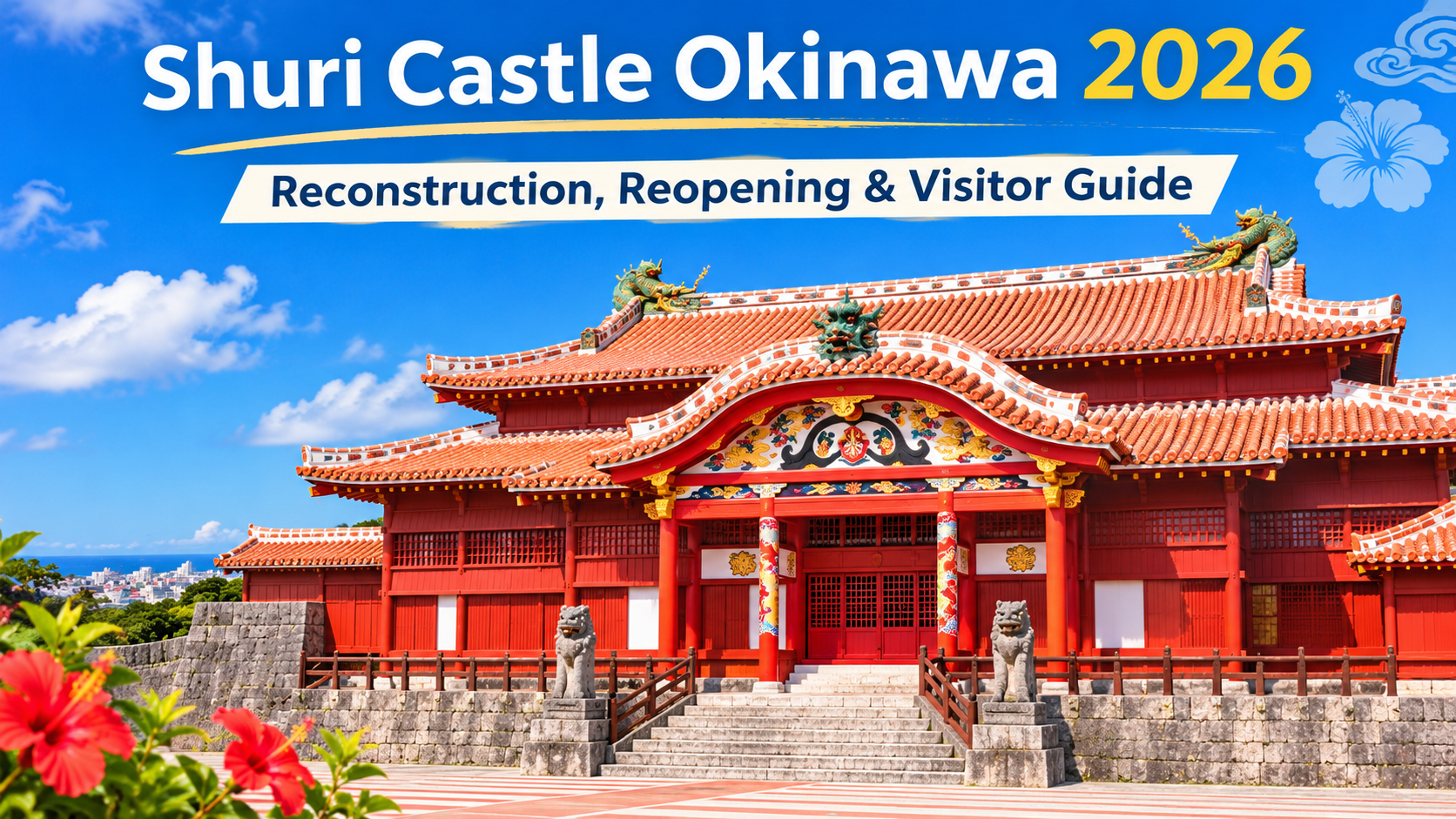
Shuri Castle, also known as Shurijo Castle, is one of Okinawa’s most famous historical landmarks. Located on a hill in Naha, the capital of Okinawa Prefecture, it was once the center of the powerful Ryukyu Kingdom.
Unlike the white castles found in many parts of Japan, Shuri Castle is famous for its bright red buildings, beautiful stone walls, and decorative dragon sculptures.
Its appearance reflects Okinawa’s unique history and cultural connections with China, Japan, and other Asian countries.
The castle is also one of the most important symbols of Okinawan identity.
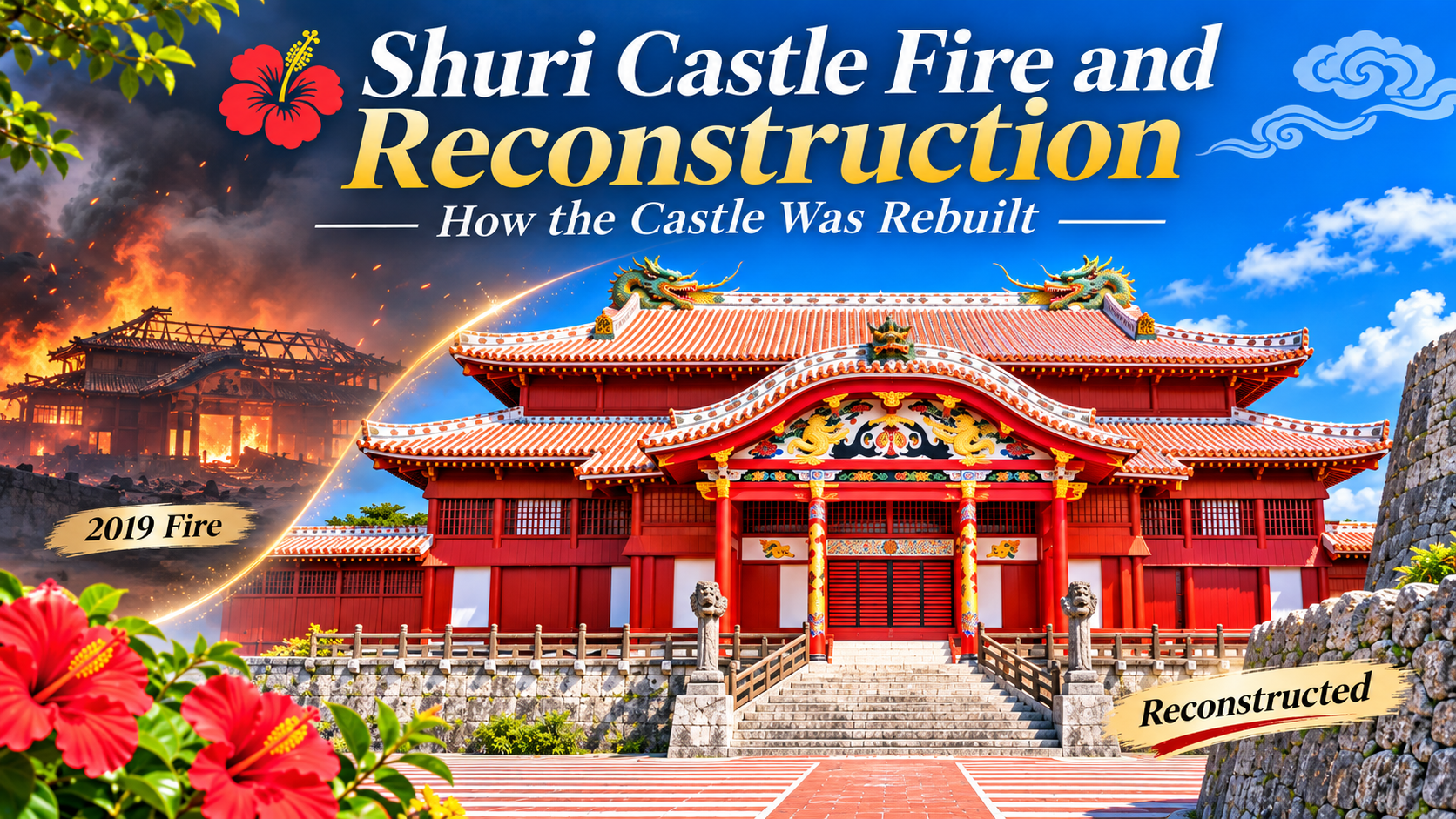
Although its main hall was destroyed by fire in 2019, a major reconstruction project has brought this beautiful landmark back to life.
With the restored main hall scheduled to reopen to visitors on November 23, 2026, Shuri Castle is entering an exciting new chapter.
For travelers interested in history, architecture, and traditional culture, it is an essential place to visit during a trip to Okinawa.
1.2 The History of Shuri Castle and the Ryukyu Kingdom
To understand Shuri Castle, we first need to explore the history of the Ryukyu Kingdom.
The Ryukyu Kingdom was established in 1429 and continued until 1879, lasting approximately 450 years.
During this period, Okinawa was the center of an independent kingdom with its own royal family, government, and traditions.
Shuri Castle served as the royal palace and the political and cultural center of the kingdom.
The Ryukyu Kingdom developed strong trading relationships with China, Japan, Korea, and Southeast Asian countries.
These international connections helped create Okinawa’s unique culture, including its traditional music, clothing, food, and architecture.
In 1609, the Japanese Satsuma domain invaded Ryukyu, greatly influencing the kingdom’s political position.
The kingdom eventually ended in 1879, when Okinawa became part of modern Japan.
Today, Shuri Castle helps visitors understand this fascinating chapter of East Asian history.
1.3 Why Does Shuri Castle Look Different From Other Japanese Castles?
If you have visited Osaka Castle or Himeji Castle, you may notice something surprising about Shuri Castle.
It looks completely different.
Traditional Japanese castles often feature white walls, tall towers, and defensive structures.
Shuri Castle, however, is known for its bright vermilion buildings, curved roofs, decorative patterns, and impressive stone gates.
Its design combines influences from Chinese palace architecture and Japanese wooden building traditions, while maintaining a distinctive Ryukyuan style.
The main hall, called the Seiden, is especially beautiful.
Its red wooden pillars and colorful decorations create an atmosphere unlike that of most Japanese castles.
Dragon sculptures are another important feature. They reflect the royal authority and ceremonial traditions of the Ryukyu Kingdom.
These architectural details make Shuri Castle more than a beautiful tourist attraction.
They tell the story of a kingdom that developed its own identity through centuries of cultural exchange.
1.4 Is Shuri Castle a UNESCO World Heritage Site?
Yes, but there is an important detail that many visitors do not know.
Shuri Castle is associated with the UNESCO World Heritage property called the Gusuku Sites and Related Properties of the Kingdom of Ryukyu.
This collection of historical sites was added to the UNESCO World Heritage List in 2000.
However, the World Heritage designation applies to the historic castle site and its surviving archaeological remains, not to the modern reconstructed main hall itself.
This distinction is important because the visible palace buildings have been rebuilt.
Archaeological remains beneath the castle reveal information about older structures and earlier periods of Ryukyuan history.
These remains help researchers understand how the royal complex changed over time.
The World Heritage property also includes other important Okinawan locations, such as Tamaudun, Shikinaen, and several ancient castle sites.
Visiting Shuri Castle is therefore an opportunity to explore a much larger story about Okinawa’s cultural heritage.
1.5 Why Is Shuri Castle So Important to Okinawan People?
For many people in Okinawa, Shuri Castle represents much more than an old royal palace.
It is a powerful symbol of local history, cultural identity, and resilience.
The castle has experienced wars, fires, destruction, and reconstruction throughout its long history.
During the Battle of Okinawa in 1945, the historic castle buildings were destroyed.
The main hall was reconstructed and opened in 1992, becoming one of Okinawa’s best-known landmarks.
Then, in 2019, another devastating fire destroyed the main hall and several surrounding buildings.
The loss deeply affected people across Okinawa.
However, the determination to rebuild the castle brought communities together once again.
People volunteered, donated money, and supported the restoration project.
Today, the reconstructed Shuri Castle represents both the history of the Ryukyu Kingdom and the continuing efforts to protect Okinawan culture for future generations.
2. Shuri Castle Fire and Reconstruction: How the Castle Was Rebuilt
One of the most common questions about Shuri Castle is what caused the 2019 fire.
Investigators examined the site and reviewed the circumstances surrounding the disaster.
However, the exact cause was not conclusively determined.
An investigative committee considered the possibility of problems involving electrical equipment, but it could not establish a definite cause.
The extensive use of wood in the castle buildings also contributed to the rapid spread of the flames.
The disaster raised serious questions about fire prevention at historical wooden structures.
Protecting traditional architecture is challenging because buildings must preserve their historical appearance while meeting modern safety requirements.
The reconstruction project has therefore included major improvements to fire detection and prevention systems.
These measures are intended to reduce the risk of another disaster.
Visitors returning to Shuri Castle in 2026 will see not only a restored historical landmark but also a site designed with stronger modern safety protections.
2.3 Shuri Castle Reconstruction Timeline: From 2019 to 2026
The reconstruction of Shuri Castle has been a long and carefully planned project.
Rather than simply replacing the damaged buildings, the restoration team has worked to recreate their historical appearance using traditional materials and specialized craftsmanship.
Here is a simple timeline of the main events.
YearMajor event2019A major fire destroys the main hall and eight other buildings.2020–2021Recovery work, research, and restoration planning continue.2022Reconstruction of the main hall officially begins in November.2023The wooden framework of the main hall takes shape.2024Roof construction and other major building work progress.2025The restored exterior becomes increasingly visible.September 2026The main hall restoration reaches completion.November 22, 2026An official completion ceremony is scheduled.November 23, 2026The restored main hall is scheduled to open to the public.
The project has required years of historical research, careful construction, and cooperation between specialists.
For visitors, this timeline makes the restored castle even more meaningful.
Every decorative detail represents years of work and the dedication of people determined to preserve Okinawa’s heritage.
2.4 Traditional Craftsmen Behind the Reconstruction
One of the most fascinating parts of the Shuri Castle reconstruction is the craftsmanship involved.
Specialists from Okinawa and other parts of Japan have worked together to recreate the historic building.
Traditional carpenters have used their knowledge of wooden construction to rebuild the main structure.
Other skilled workers have restored decorative carvings, roof tiles, lacquer finishes, and colorful painted details.
Japanese cypress has been used extensively in the wooden structure, along with selected materials from Okinawa and overseas.
The project has also reused some materials connected with the earlier castle.
For example, fragments of roof tiles damaged in the 2019 fire have been recycled into materials used for the new tiles.
This approach connects the rebuilt castle with the structure that stood before it.
The reconstruction is also helping preserve traditional skills.
By passing these techniques to younger craftspeople, the project supports the future of Okinawan cultural heritage.
2.5 How People Around the World Helped Rebuild Shuri Castle
After the 2019 fire, support for Shuri Castle came from many different places.
People across Okinawa, mainland Japan, and other countries contributed to recovery efforts.
Donations helped support reconstruction-related activities, traditional craftsmanship, and cultural preservation.
According to reporting published in October 2026, approximately 6.2 billion yen in donations had been received by the end of September 2026.
Community participation was also important.
Volunteers helped with activities connected with damaged roof tiles, while local organizations worked to share information about the castle’s history and restoration.
The project became a symbol of cooperation between generations and communities.
For Okinawans living overseas, supporting Shuri Castle was also a way to maintain a connection with their cultural roots.
The result is a reconstruction that carries deep emotional meaning.
When visitors admire the restored main hall, they are seeing more than a building.
They are witnessing the result of years of collective effort.
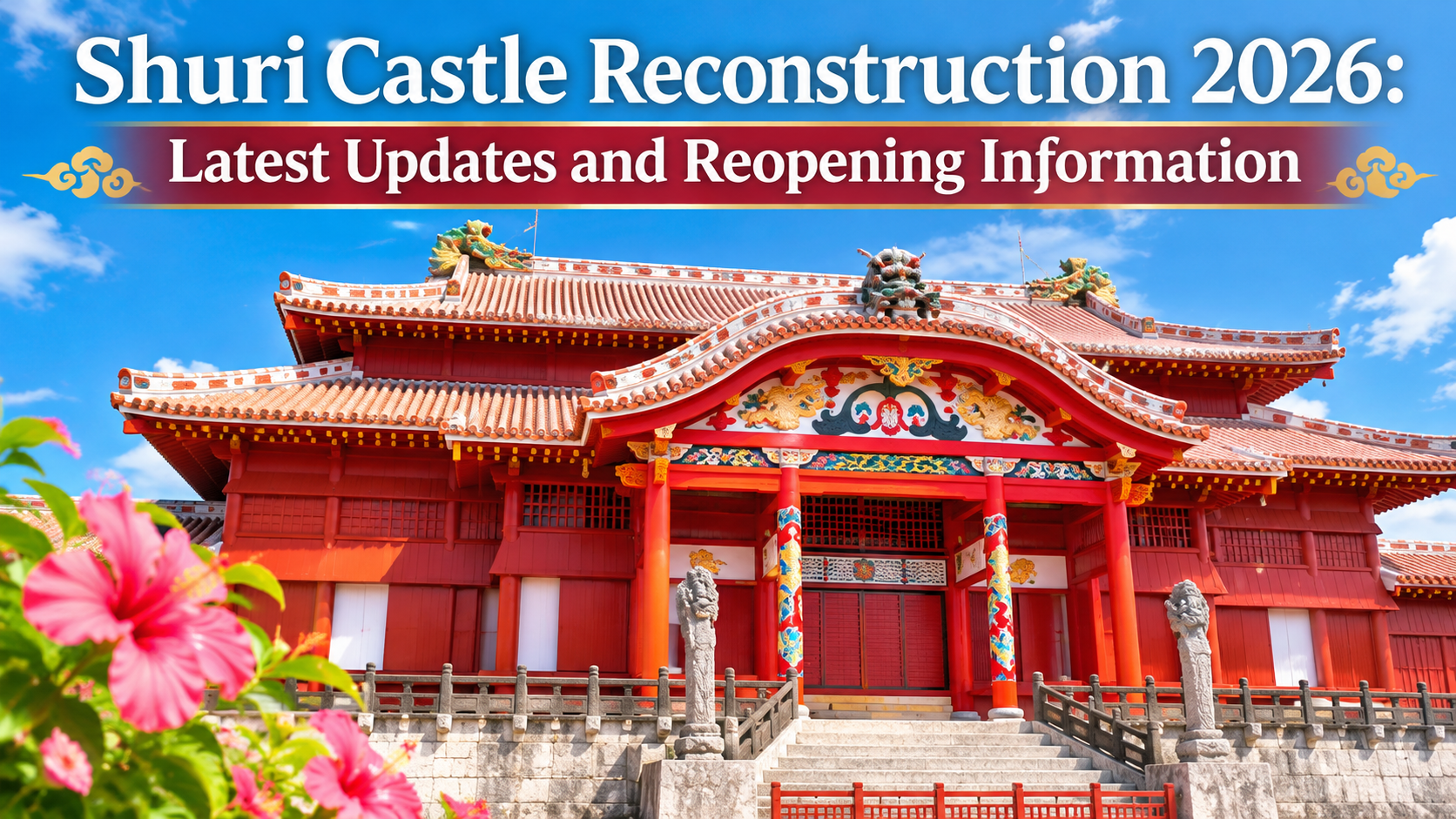
3. Shuri Castle Reconstruction 2026: Latest Updates and Reopening Information
3.3 What Makes the Restored Main Hall So Beautiful?
The newly reconstructed main hall brings back many of the details that made Shuri Castle famous.
One of its most recognizable features is the bright red exterior.
The traditional red roof tiles create a striking contrast against Okinawa’s blue sky.
The building also features carefully restored wooden pillars, decorative carvings, and detailed painted patterns.
Dragons appear throughout the architecture, reflecting royal authority and cultural traditions.
The large stone dragon pillars near the entrance are particularly impressive.
Inside the main hall, craftsmen have recreated colorful decoration associated with the royal throne area.
These details are based on historical research and records from earlier reconstructions.
The result is a building that combines traditional Ryukyuan design with modern construction and conservation techniques.
Even visitors who are not usually interested in architecture may find themselves stopping to admire the intricate details.
Looking closely at the carvings and painted decorations is one of the best ways to appreciate the enormous effort behind the reconstruction.
3.4 How Has Fire Safety Improved at the New Shuri Castle?
After the 2019 fire, fire prevention became a central part of the reconstruction project.
Traditional wooden buildings can be especially vulnerable to flames, making early detection and rapid response essential.
The restored main hall has been equipped with improved safety systems.
These include electrical safety equipment, automatic fire notification systems, and sprinklers.
Additional firefighting measures have also been introduced around the restored structure.
The goal is to protect the building without significantly changing its historical appearance.
This balance between preservation and modern technology is one of the most important challenges in restoring cultural landmarks.
The improved safety measures are also intended to protect visitors and staff.
Although no system can completely eliminate every risk, modern equipment can help reduce damage and improve emergency response.
The reconstruction demonstrates how traditional architecture and modern safety technology can work together to preserve an important historical site.
3.5 Will the North Hall and South Hall Also Be Reconstructed?
The restoration of the main hall is an important achievement, but it is not the end of the Shuri Castle reconstruction project.
The original castle complex included several buildings with different functions.
The North Hall, South Hall, and other surrounding structures played important roles in royal ceremonies, administration, and daily life.
These buildings were also affected by the 2019 fire.
According to the official restoration policy, work on additional facilities will continue in stages after the main hall is completed.
However, visitors should not assume that every building will reopen at the same time in November 2026.
The schedule for later restoration phases may change as planning, research, and construction progress.
This means Shuri Castle will continue to develop in the coming years.
For travelers, the ongoing reconstruction provides an opportunity to learn about traditional building methods and the challenges of preserving historical architecture.
5.1 How to Get to Shuri Castle From Naha Airport and Kokusai Street
Shuri Castle is located in Naha, making it relatively easy to reach from the airport and central city areas.
One of the most convenient options is the Okinawa Urban Monorail, commonly called the Yui Rail.
From Naha Airport Station, the journey to Shuri Station takes approximately 27 minutes.
After arriving at Shuri Station, walk about 15 minutes to Shureimon Gate.
The walk to the main visitor facilities takes a little longer.
If you are staying near Kokusai Street, you can board the monorail at a convenient nearby station, such as Makishi or Kencho-mae, and travel toward Shuri.
Local buses and taxis are also available.
Driving is possible, but parking spaces can fill quickly, especially during busy periods.
The park recommends using public transportation when possible.
The ideal amount of time depends on your interests and whether you plan to enter the restored main hall.
For a quick visit, approximately one hour may be enough to explore some of the free outdoor areas and take photographs.
However, this is not enough time for a relaxed visit to the entire castle complex.
If you have reserved interior viewing, allow approximately 90 to 120 minutes, as recommended by the park.
Here are three suggested visiting plans.
Time availableSuggested experience1 hourShureimon Gate, exterior pathways, and selected photo spots2 hoursPaid area, reconstructed main hall if reserved, and restoration exhibitsHalf dayShuri Castle plus Tamaudun and the historic stone-paved streets
Remember that Shuri Castle is located on a hill.
You will need extra time to walk between the monorail station, the castle gates, and the main hall.
If you are visiting with young children or older family members, plan additional breaks.
5.5 Best Time to Visit Shuri Castle and Helpful Travel Tips
Shuri Castle can be visited throughout the year, but some seasons are more comfortable than others.
Spring and autumn are particularly pleasant for walking around Okinawa.
Summer can be very hot and humid, so bring water, sunscreen, and a hat.
The castle grounds include outdoor paths, stone steps, and areas exposed to direct sunlight.
Comfortable walking shoes are highly recommended.
If you plan to visit the restored main hall after its reopening, book your preferred date and time early.
The park’s published crowd forecast indicates that early mornings may be particularly busy, while some afternoon periods are expected to be quieter.
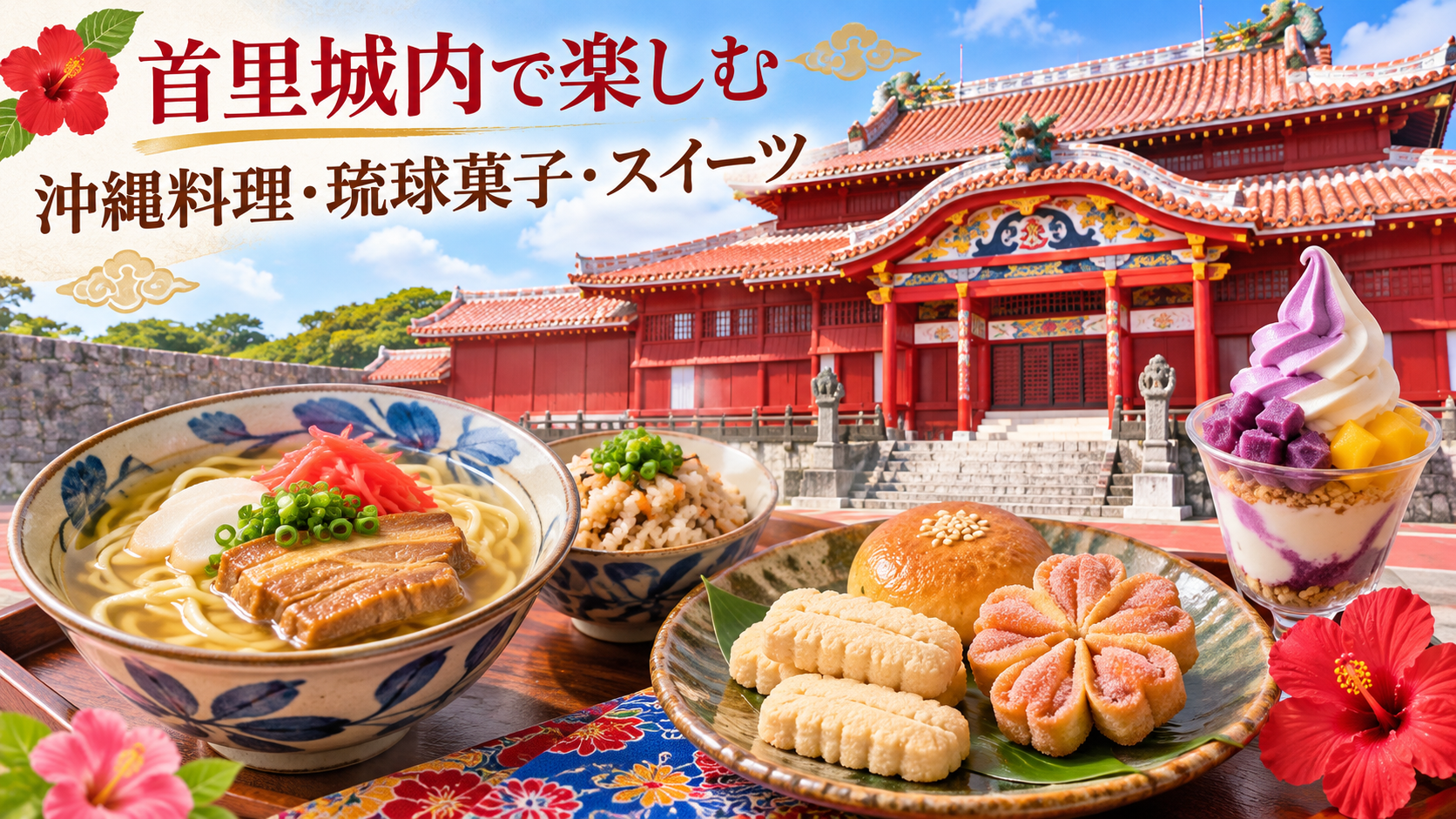
After exploring the castle, consider trying Okinawan food.
Okinawa soba, a popular noodle dish, is an excellent choice.
Traditional Ryukyuan sweets and jasmine tea, called sanpin-cha, are also worth trying.
The park has dining and refreshment facilities, including Restaurant Suimui, where visitors can enjoy local dishes.
Conclusion: Why Shuri Castle Deserves a Place on Your Okinawa Itinerary
Shuri Castle is one of the best places to discover Okinawa’s unique history and culture.
From its days as the royal palace of the Ryukyu Kingdom to its destruction during World War II and the devastating fire of 2019, the castle has experienced many difficult chapters.
The reconstruction of the main hall, completed in September 2026, marks a major achievement.
With the restored Seiden scheduled to reopen to the public on November 23, 2026, travelers have a new opportunity to experience this remarkable landmark.
Whether you are interested in traditional architecture, Japanese history, photography, or cultural heritage, Shuri Castle offers something memorable.
Take your time, explore the beautiful gates, admire the dragon carvings, and enjoy the historic streets surrounding the castle.
Most importantly, remember that Shuri Castle is not just a beautiful building.
It represents centuries of Okinawan history and the determination to keep that history alive.